
Hearing Tests: Examination & Diagnosis
As Suffolk’s trusted ear care specialist, Ear View uses pure tone audiometry to give you the best picture of your hearing health, either in the clinic or from the comfort of your own home.
Our specialist, Jason Curtis, provides a gentle, patient-forward approach to your ear health.
When using Ear View, you will benefit from shorter wait times, an award-winning audiologist, and appointments tailored to you.
Ear View provides hearing tests through private clinic care, but without an expensive price tag.
If you’ve noticed any changes to your hearing lately, such as conversations sounding more muffled or your TV being turned up louder than you previously needed it, you are not alone.
A Healthwatch study in 2023 showed that over 114,000 people in Suffolk, that’s 1 in 7 of the population, experience hearing loss or hearing issues. The figure rose to 1 in 3 among people aged over 65.
With so many of the population facing hearing impairment/Loss, and the long waiting list for NHS treatment (ESNEFT wait times are now 6+ weeks for an initial appointment), private hearing assessments allow for quick treatment for those suffering with hearing loss.
Why you need a hearing test
Hearing loss can happen over time. Many people put off testing due to long NHS wait times or high-pressure private appointments, which more often than not, end with pressure to purchase hearing aids. A hearing test with Ear View is simply a test.
You will leave knowing exactly how your hearing is performing, with honest advice, and no obligation to purchase hearing aids.. At Ear View, our goal is for you to feel comfortable and have the complete picture of your hearing health.
Ringing in the ears (Tinnitus)
Ringing in the ears, also known as tinnitus, is linked to underlying changes in your hearing thresholds.
Tinnitus can be temporary or permanent.Temporary cases can be caused by earwax blockage or infections, and with prompt treatment, you can get instant relief from symptoms.
Chronic (permanent) tinnitus can be a side effect of hearing loss, as your brain tries to patch the frequencies it’s missing with static sound.
Whilst chronic tinnitus tends to always be present in some form, treating the underlying condition with hearing aids can help relieve symptoms.
A hearing test can help you get quick relief and peace of mind if you are experiencing any signs of tinnitus.
How do I know if I need a hearing test?
Hearing loss develops gradually. This means your brain can adapt to it without you realising it. It is often those closest to us who will notice the first signs of hearing loss. If you, or somebody close to you, notices any of these signs, booking a hearing assessment can help protect your long-term hearing and alleviate symptoms.
Using your TV or radio louder than others prefer
If others complain that your television or radio is too loud, then you may be experiencing some level of hearing loss.
Our assessments can show you exactly which pitches are dropping out of your hearing profile, so you can restore daily clarity.
Struggling to concentrate
Struggling to follow conversations in restaurants, at family gatherings, or in busy meetings is often one of the earliest signs of high-frequency hearing loss.
In these environments, your brain relies heavily on sharp consonant sounds to separate individual voices from background noise. When those frequencies start fading, speech can begin to sound like a confusing blur.
If you notice that you find yourself trying to lip-read or struggling in loud environments, a hearing test can help restore your social confidence and help you feel more relaxed in loud social settings.
Difficulty hearing higher pitches
If you find it difficult to catch the voices of children or soft consonant sounds, this points towards high-frequency hearing loss. Our tests map the specific pitches to show exactly where your hearing may need some support.
A feeling of fullness in the ear
If your hearing feels dull and your ear feels blocked or has a full sensation, you may be suffering from an earwax blockage or infection. Our hearing tests include an ear canal examination to check for any signs of blockage or fluid in the ear.
What does a hearing test involve?
-

Discussion
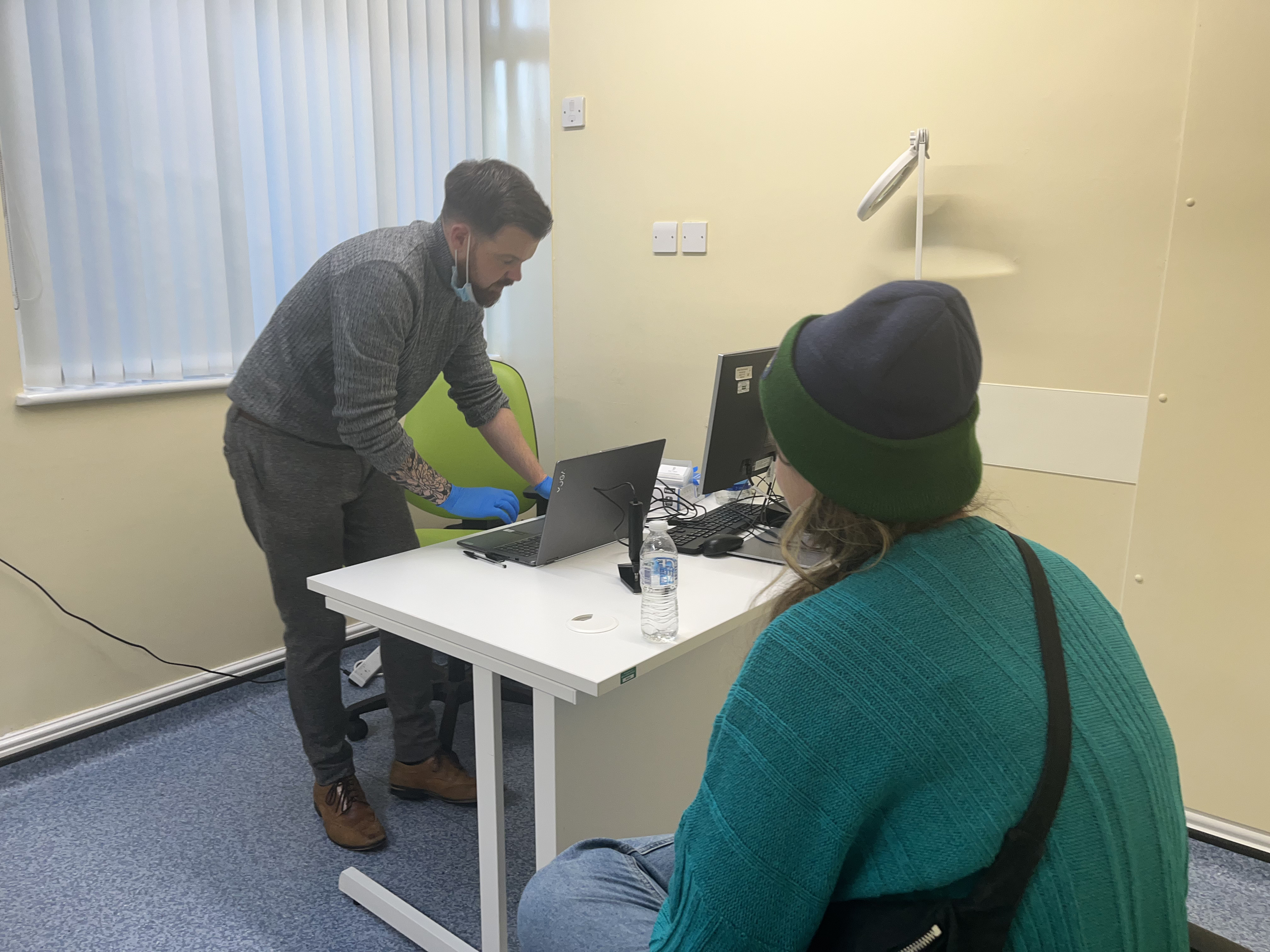
Our hearing assessments are non-invasive and painless, and take around 40 minutes.
Our hearing assessment begins with a discussion about your hearing, lifestyle, and any concerns you may have about your ears or hearing health.
-
Examination
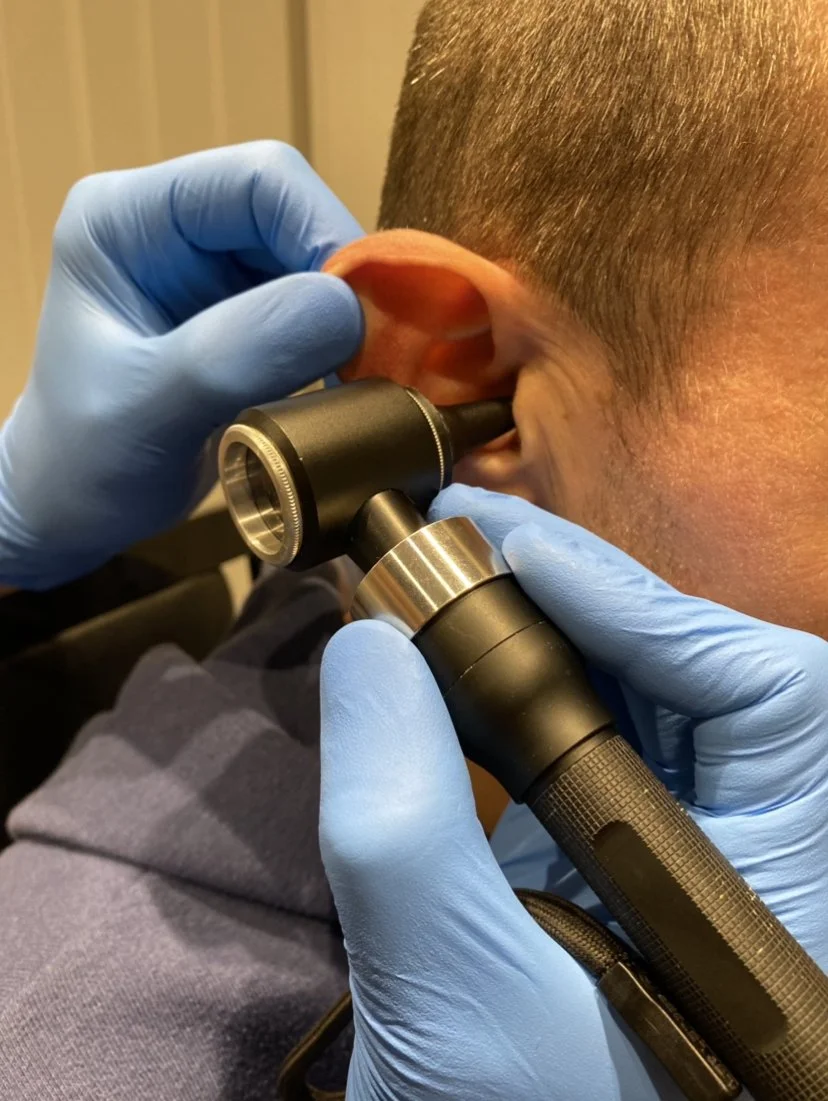
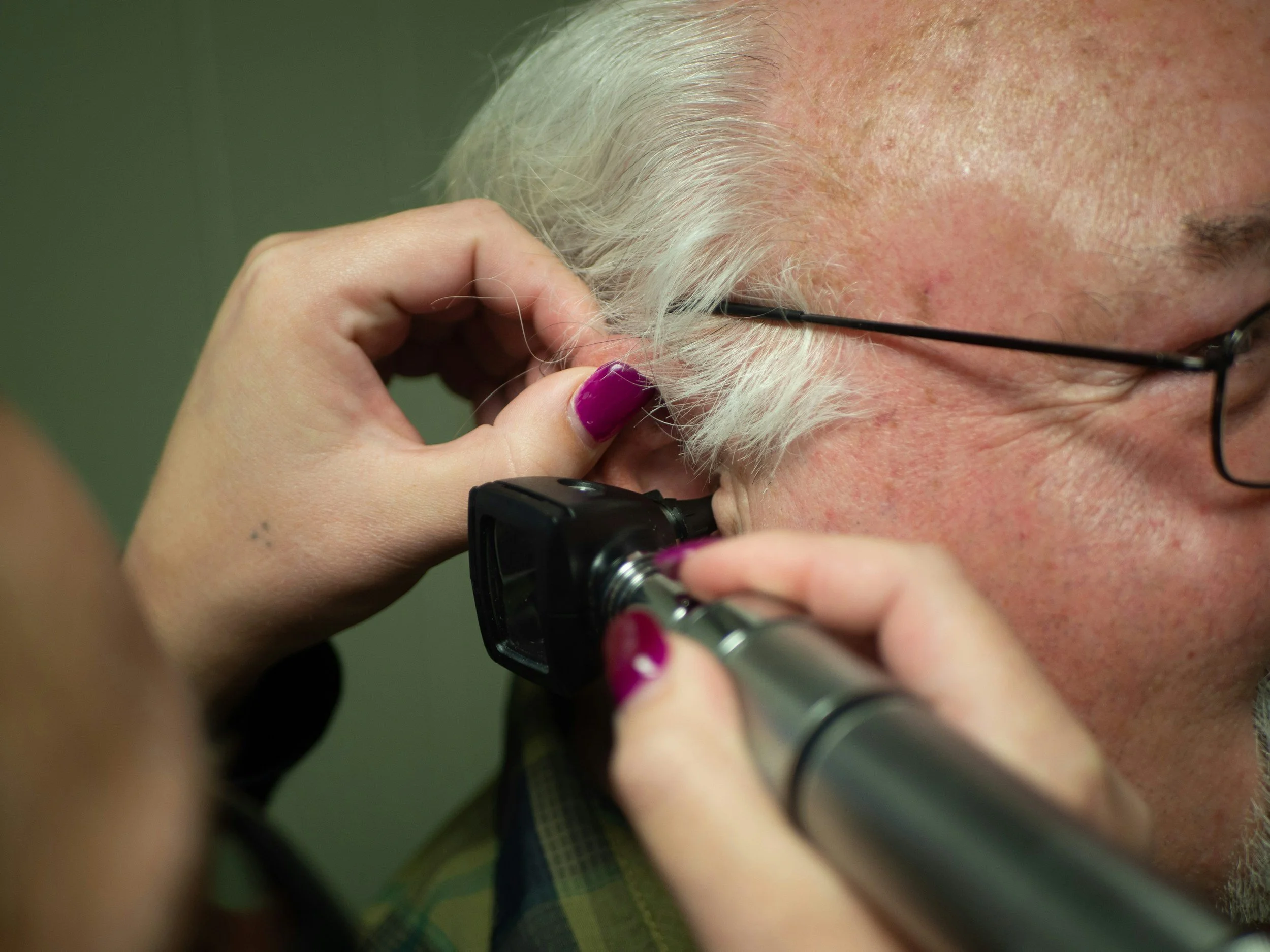
We will then examine your ear canals with an otoscope to check your eardrum and identify any treatable issues, such as earwax blockage.
An abundance of wax in the ear canal can affect the result of your hearing test, so it is important that we identify any blockages before continuing.
If we find a significant blockage, you will be offered our wax removal service there and then, before continuing with the hearing assessment.
-

Testing
For the hearing test, we use Pure Tone Audiometry (PTA).
Using a pair of lightweight headphones, we will play a series of tones at different pitches and volumes, and you will simply press a button whenever you hear the sound.
This allows us to identify the quietest sounds you can hear in each ear.
-
Results
After the hearing test, you will receive your results immediately.
We will provide you with a clear explanation of your results and map out a tailored care plan together if needed.
We always leave time at the end of the appointment to discuss your concerns and answer any questions you may have.oes here
How often should I get a hearing test?
Hearing tests are not just for when you sense an issue. They are recommended throughout various stages of life and for those with certain lifestyles.
Our hearing assessments are only available to those aged 18+
Hearing assessments are normally recommended before entry to school or if developmental concerns arise.
Children & infants
1
A baseline test in early adulthood is recommended, with a test every 3–5 years thereafter if you are asymptomatic.
Teenagers & Young Adults
2
5
Hearing evaluations are advised every 2 to 3 years.
Adults
3
Regular Loud Noise Exposure
4
Hearing assessments are recommended annually.
OAPs & 60+
If you work in a loud environment, such as a construction site, your ears are regularly exposed to loud noises that may harm your hearing. It is recommended to get a hearing test prior to starting work in a loud environment, followed by an annual test for the first 2 years, and then every three years after that.
What conditions can hearing tests help discover?
Getting your ears tested uncovers the root cause of auditory changes.
A hearing test can map the degree of sensorineural hearing loss, and the examination identifies any potential blockages or infections.
Hearing tests can help determine whether a drop in hearing is permanent or temporary.
Presbycusis (age-related hearing loss)Presbycusis is the gradual loss of high-frequency hearing that occurs naturally as we age.
Noise-Induced Hearing Loss (NIHL)Noise-induced hearing loss occurs when the delicate hair cells in the inner ear are damaged due to exposure to loud occupational or recreational sounds.
Conductive Hearing LossConductive hearing loss happens when sound waves are unable to travel efficiently through the outer or middle ear to the inner ear. Conductive hearing loss occurs as the result of an ear infection, earwax blockage, or bone abnormalities like otosclerosis.
Ménière’s DiseaseA disorder of the inner ear, often causing episodes of vertigo (dizziness), a feeling of fullness in the ear, and fluctuating hearing loss.
Acoustic NeuromaAcoustic neuroma (also known as vestibular schwannoma) is a rare benign growth on the auditory nerve. It affects roughly 13 out of 1 million people in the UK annually and is characterised by symptoms such as unilateral tinnitus, one-sided hearing loss, and balance issues.
Ready to see us?!
Booking a hearing test is a quick and easy process.
How accurate are our hearing tests?
Our hearing evaluations use Pure Tone Audiometry (PTA) testing, the gold standard in clinical audiology.
Pure Tone Audiometry achieves an 82% to 100% diagnostic sensitivity and a 95% to 99% specificity, which means it is highly successful at correctly identifying those who have an actual hearing impairment, while eliminating any false alarms for those with normal hearing.
We are able to see which frequencies or pitches you struggle with and pinpoint the quietest sounds your ears are able to pick up.
By using this type of testing, we are able to isolate and track your auditory responses across the clinical frequency spectrum, all the way from 250 Hz to 8,000 Hz, measuring sound thresholds down to the exact decibel hearing level (dB HL).

How much does a hearing test cost?
In-clinic hearing test: £55
Home-visit hearing test: £65
Investing in a private assessment of your hearing will give you a clearer and more comprehensive picture of your hearing health that basic high street tests cannot match.
High street hearing tests tend to be a quick pass-or-fail test, with the ultimate goal of selling you a product at the end. Instead, our tests are objective, health-first checks that start with examining your ear canals for blockages or medical issues before performing a pure tone audiometry test to check your hearing.
By going private, you are able to bypass long waiting times from the NHS, gain immediate access to treatment such as microsuction or irrigation to treat blockages, and access top-of-the-line hearing aids should you have a genuine need for them.
This care is delivered by a dedicated specialist who will be with you throughout every stage of your assessment, treatment, and aftercare if necessary.
Where can I get my ear test?





You can access one of our hearing examinations at one of our above locations across Suffolk.
Alongside hearing tests, you can also access earwax removal services and hearing aid fittings from these locations too.
Hearing Test FAQs
-
No, you do not need a GP referral for a hearing test with Earview; you can book with us directly using our online booking service.
-
If you would prefer a hearing test at home rather than in one of our clinics, call us on 07925651116 or email us at info@earview.co.uk.
-
We understand that things change or come up out of the blue. If you need to reschedule your appointment, please give us as much notice as possible. You can let us know by calling us on 07925651116 or emailing info@earview.co.uk.
-
Jason Curtis is a fully qualified audiologist, specialising in hearing aids, ear irrigation, and microsuction. Prior to setting up Ear View, Jason spent years gaining hands-on experience working for a local hearing care provider in Suffolk.
He is registered with HCPC (The Health and Care Professions Council) and a member of BSHAA (British Society of Hearing Aid Audiologists).
-
There are many benefits to using a private service rather than the NHS for your hearing assessment.
By opting for a private appointment, you can bypass lengthy waiting times. The current wait time for East Suffolk and North Essex NHS Foundation Trust is six weeks for an initial appointment (not including any treatment or further investigation). Ear View offers direct access and can sometimes accommodate appointments within the same week.
There is greater continuity of care when you opt for a private appointment. Hospitals are busy environments, where you will rarely see the same audiologist twice. At Ear View, you will deal directly with our dedicated practitioner, Jason Curtis, throughout the entirety of your assessment, from the initial consultation to treatment and aftercare.
With a private appointment with Ear View, we will give you the time you need. NHS appointments operate on a fast-paced time block. At Earview, we allow ample time to discuss your symptoms, assess your hearing, and talk through any concerns or questions you may have.
Finally, NHS hearing assessments can be delayed or rescheduled due to earwax blockages. The NHS does not routinely offer earwax removal services any more. This means that if the audiologist’s view is blocked during the assessment, you would have to go home, treat the blockage, and rejoin the waiting list. At Ear View, we handle both hearing assessments and earwax removal, meaning that if wax is the issue, it can be cleared safely via microsuction or irrigation. We can then see immediately whether your hearing returns and, if not, proceed with a hearing assessment.
-
Online screenings and smartphone apps can offer a quick, convenient baseline check, but they cannot replace the clinical accuracy and safety of an in-person hearing test. An online test or smartphone app relies on uncalibrated headphones and uncontrollable background noise, which can lead to inaccurate results. More importantly, an app or online service cannot provide a physical ear examination to check for earwax blockages, infections, or abnormalities.
-
Opting for a local and trusted independent audiologist means your hearing care is driven by patient health rather than corporate profit or shareholder demands. Unlike major chains, where high staff turnover can result in your point of contact for your care changing, at Ear View we offer direct, consistent communication with our specialist, Jason Curtis, who will truly know you and your history. By keeping your care local, you will receive care tailored to you and personalised attention from a business invested in the health of the local residents it serves.
-
No, you cannot safely or legally get prescription hearing aids without a professional hearing test, even when buying privately. Under UK regulations set out by the Health and Care Professions Council (HCPC), a private or NHS audiologist is legally required to perform a hearing assessment before dispensing a prescription device. This ensures that the hearing aids you receive are precisely customised to your specific audiogram and programmed for your ears.
-
Yes, using home tools like the World Health Organization’s HearWHO app or simple speech-in-noise checks can be okay if used as a quick baseline; however, a professional in-person hearing test is always better and necessary for an accurate diagnosis.
You do not have to struggle or make do with distorted hearing or suffer with any symptoms you are experiencing alone.
Our professional audiologist, Jason Curtis, can look for the cause of any discomfort and help restore clarity and improve your hearing.